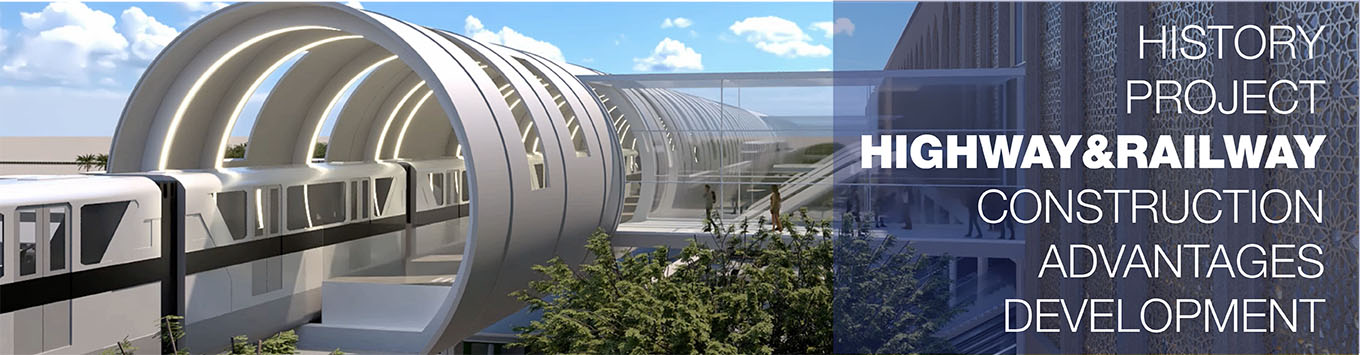
| Rail gauge | 1435 mm |
| Design Speed (passenger trains) | 300 km/h |
| Design Speed (freight trains) | 140 km/h |
| Minimum horizontal radius | 7,000.0 m |
| Maximum longitudinal slope | 12.5 ‰ |
| Vehicle loading gauge limit | UIC C |
| Minimum wheelbase | 4,2 m |
| Operating speed (freight trains) | 120 km/h |
| Design axle load | 25 t |
| Permitted axle mass: | |
| • wagons ≤ 100 km/h | 22,5 t |
| • wagons ≤ 120 km/h | 20 t |
| Minimum useful length of passing tracks | 750 m |
– ERTMS (European Rail Train Management System – Level 2)
– ETCS (European Traffic Control System)
– GSM-R Global System for Mobile Communication
– Power supply 25 kV A.C.
– Rail Track: 60E1 (ex UIC 60)
– Sleepers: Pre-stressed Concrete Mono Bloc
– Rail Fastenings: e-Clip Elastic Fastening
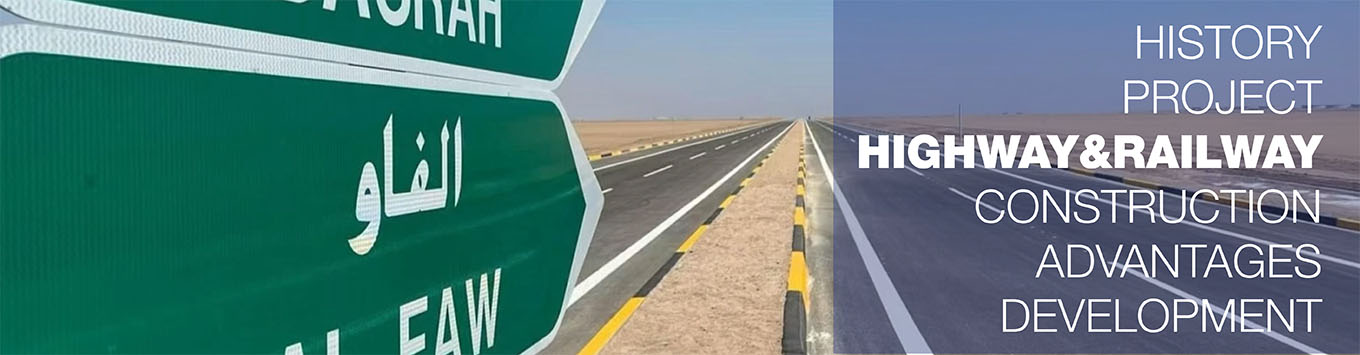
| Design Speed | 130 km/h |
| Posted Speed | 110 km/h |
| Number of lanes | 3+3 |
| Lane width | 3.75 m |
| External shoulder | 3.00 m |
| Minimum horizontal radius | 1500 m |
| Maximum longitudinal slope (desiderable) | 4 % |
| Maximum longitudinal slope | 5 % |
– AASHTO – A Policy on Geometric Design of Highways and Streets, 7th Ed. 2018
– AASTHO – Highway Safety Manual, 1st Ed. 2009
– FHWA – Manual of Uniform Traffic Control Devices for Streets and Highways by, 2003
– AASHTO – Roadside Design Guide, 4th Ed. 2011
– AASHTO – Guide for Design of Pavement Structures, 1993
– EN1317 – Road Restraint Systems